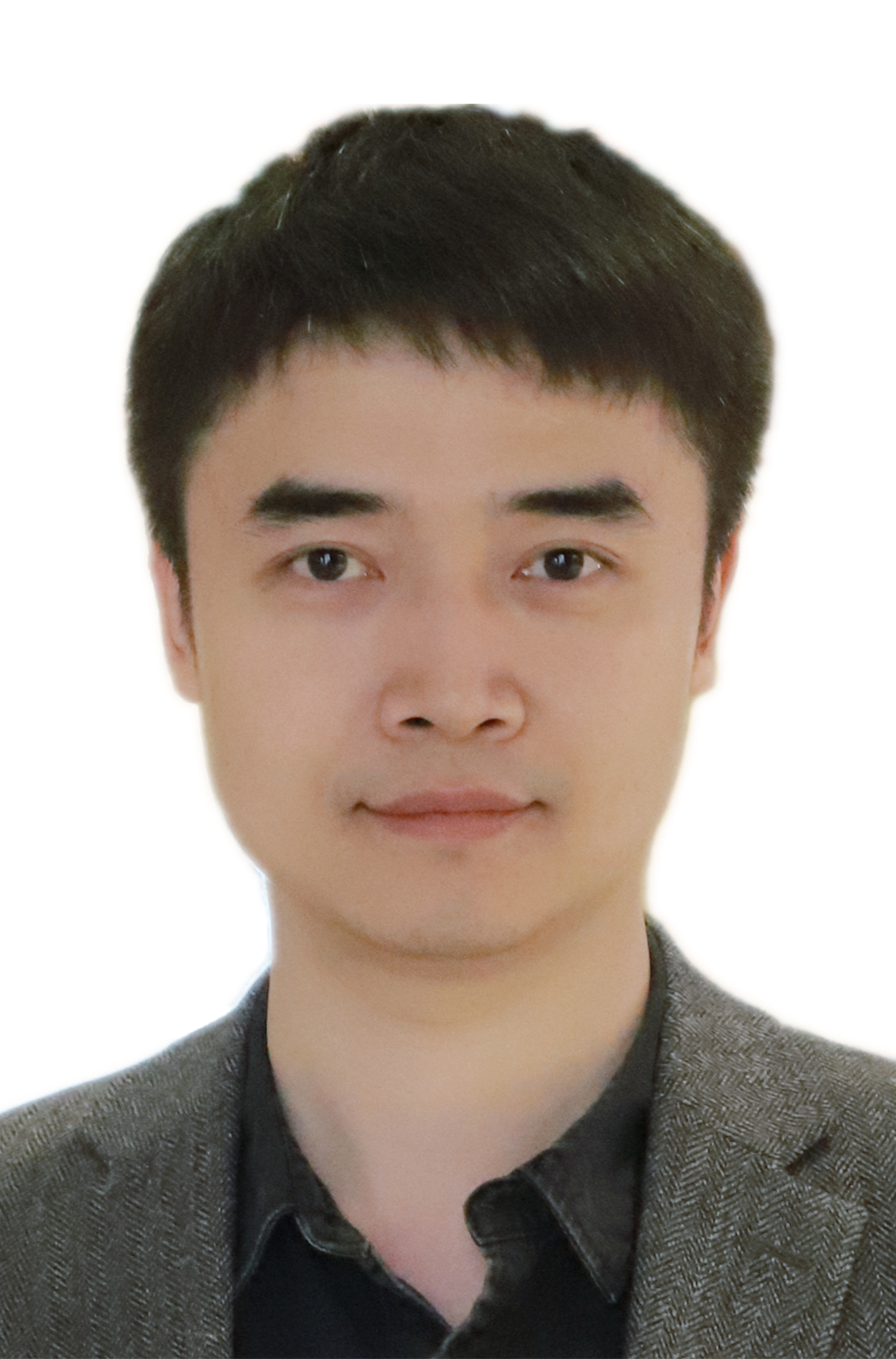
Research Interests: Electrical transport and electronic correlations in low-dimensional quantum materials
Professor, School of Physics, Nanjing University. He received his Bachelor’s and Master’s degrees from the National University of Singapore and earned his PhD from Columbia University, USA in 2014. He worked as a Kavli Fellow at Cornell University, USA from 2015 to 2019, and joined the School of Physics, Nanjing University as a professor in 2020.Professor Lei Wang has long been engaged in research on electrical transport properties of two-dimensional quantum materials and achieved pioneering technical breakthroughs in the fabrication of two-dimensional heterostructure devices. In his landmark work published in Science (342, 614–617 (2013)), he invented the pick-up transfer, stacking and encapsulation techniques for 2D materials, and pioneered the edge contact method for encapsulated 2D materials, drastically improving device quality. These techniques have become a universal platform for fabricating high-quality devices based on two-dimensional quantum materials and facilitated the emergence and advancement of research on homo- and heterostructures of 2D materials.Professor Wang’s representative experimental discoveries include: Hofstadter butterfly energy spectrum (Nature, 497, 598–602 (2013)); Electric-field-tunable fractional quantum Hall states (Science, 345, 61–64 (2014)); Anomalous fractional quantum Hall states in quantum fractal systems (Science, 350, 1231–1234 (2015)); Strain-tunable polar charges in atomic monolayers (Nature, 514, 470–474 (2014)); Ultrafast surface plasmons in graphene (Nature Photonics, 10, 244–247 (2016)); Electric-field-tunable excitons in bilayer graphene (Science, 358, 907–910 (2017)); Correlated insulating states in twisted 2D TMD systems (Nature Materials, 19, 861–866 (2020)); Quantum phase transitions in twisted 2D semiconductors (Nature, 597, 345–349 (2021)); Dimensional-crossover anomalous Hall effect in rhombohedral graphite thin films (Nature, 653, 384–390 (2026)).He has published more than 70 SCI papers, with over 30,000 total citations.